

Compton's Future Vision Takes Shape as the Hub City Draws Its Next Blueprint |
A long-range general plan, transit-centered neighborhoods and a charter review are shaping how the city grows |
For decades, outsiders have tried to tell Compton's story for it.
Right now, the city is writing its own next chapter, and it is doing it in the unglamorous language of planning documents, zoning maps and public hearings.
City planners are working through a sweeping update to the Compton General Plan, the long-range blueprint that guides how every neighborhood, corridor and vacant lot can be used for the next generation.
The update includes a dedicated economic development element meant to renew Compton's standing as the Hub City, a nickname earned by its central location in the South Bay and Gateway Cities region.
That location is the city's quiet superpower.
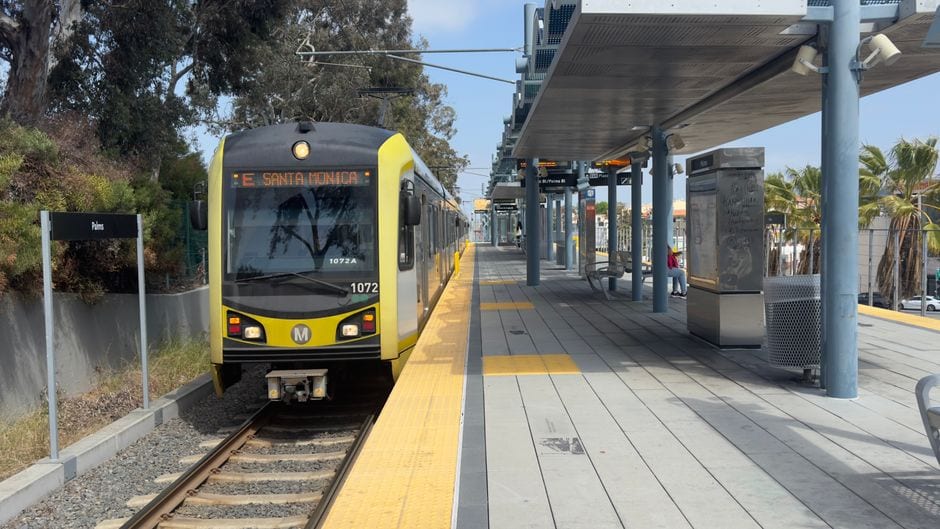
Compton is ringed by major freeways, crossed by the Metro A Line and sits a short drive from the ports, the airport and downtown Los Angeles.
The question has never been whether Compton is well positioned; it has been whether the city would plan for the growth that position invites.
The answer is starting to take shape around the train stations.
The Hub City Specific Plan envisions a compact, walkable neighborhood around the Artesia station, with room for roughly 4,800 homes along with new retail and office space by 2040.
A second transit-oriented plan centers on the A Line's Compton Station, aiming to bring housing and commerce within a short walk of the platform.
Taken together, the plans signal a shift away from car-dependent strip development toward neighborhoods built around transit, foot traffic and local shops.
The vision reaches beyond buildings.
At City Hall, a Charter Committee has been meeting throughout 2026 to review the document that defines how Compton governs itself.
Charter questions can sound abstract, but they determine how power is shared, how officials are held accountable and how quickly the city can act.
Infrastructure is the other half of the equation.
The City Council has steadily approved contracts for road rehabilitation, water well upgrades and the removal of overhead power lines in the Murray and Acacia area, a project aimed at safety and neighborhood appearance.
Residents have been blunt that more is needed, pointing to the condition of major streets like Compton Boulevard and Atlantic Avenue during public comment.
Those comments are a reminder that a future vision means little if today's potholes go unfilled.
Culture is part of the plan, too.
One councilmember recently asked staff to draft a preservation resolution to protect Compton's history, culture and community access, framing it as a way to make sure growth honors the people who built the city.
That tension sits at the heart of every conversation about Compton's future.
Residents want investment, new housing and better jobs.
They also want to make sure the families who stayed through the hard years are the ones who benefit when the cranes arrive.
Education leaders are thinking on the same long horizon.
Compton College is working from a master plan that runs through 2035, and Compton Unified is rebuilding its high school campuses one at a time.
The city's institutions, in other words, are no longer planning year to year.
They are planning decade to decade.
There are real obstacles.
Compton's finances have drawn state scrutiny in recent years, and lenders and developers pay close attention to how a city manages its books.
Long-range plans only become reality when investors trust the city to follow through.
Still, the direction is clear.
Compton is preparing for a future built around transit, homegrown talent and neighborhoods that reflect the people who live in them.
The next step belongs to residents.
General plan updates and specific plans include public meetings and comment periods, and the choices made now will shape the city for twenty years or more.
The Hub City has always been a place where roads meet.
The work ahead is making sure opportunity meets there, too. |
0 Comments
Join the conversation
Be the first to comment
Share your thoughts above.